Abstract
This study employs the 2012 to 2016 commuting flows of Florida to reexamine excess commuting (EC) through multiscale complex network analysis. The results reveal significant discrepancies in urban connectivity, hierarchy, and labor market geography between the actual (ACN) and optimal commuting networks (OCN). Compared to ACN, OCN illustrates an overly simplified and isolated polycentric commuting system. This is evident through reduced overall network connectivity, a restructured centrality distribution pattern, and fragmented community divisions. Consequently, these results underscore the importance of delving into the economic implications of commuting within the conventional EC framework.
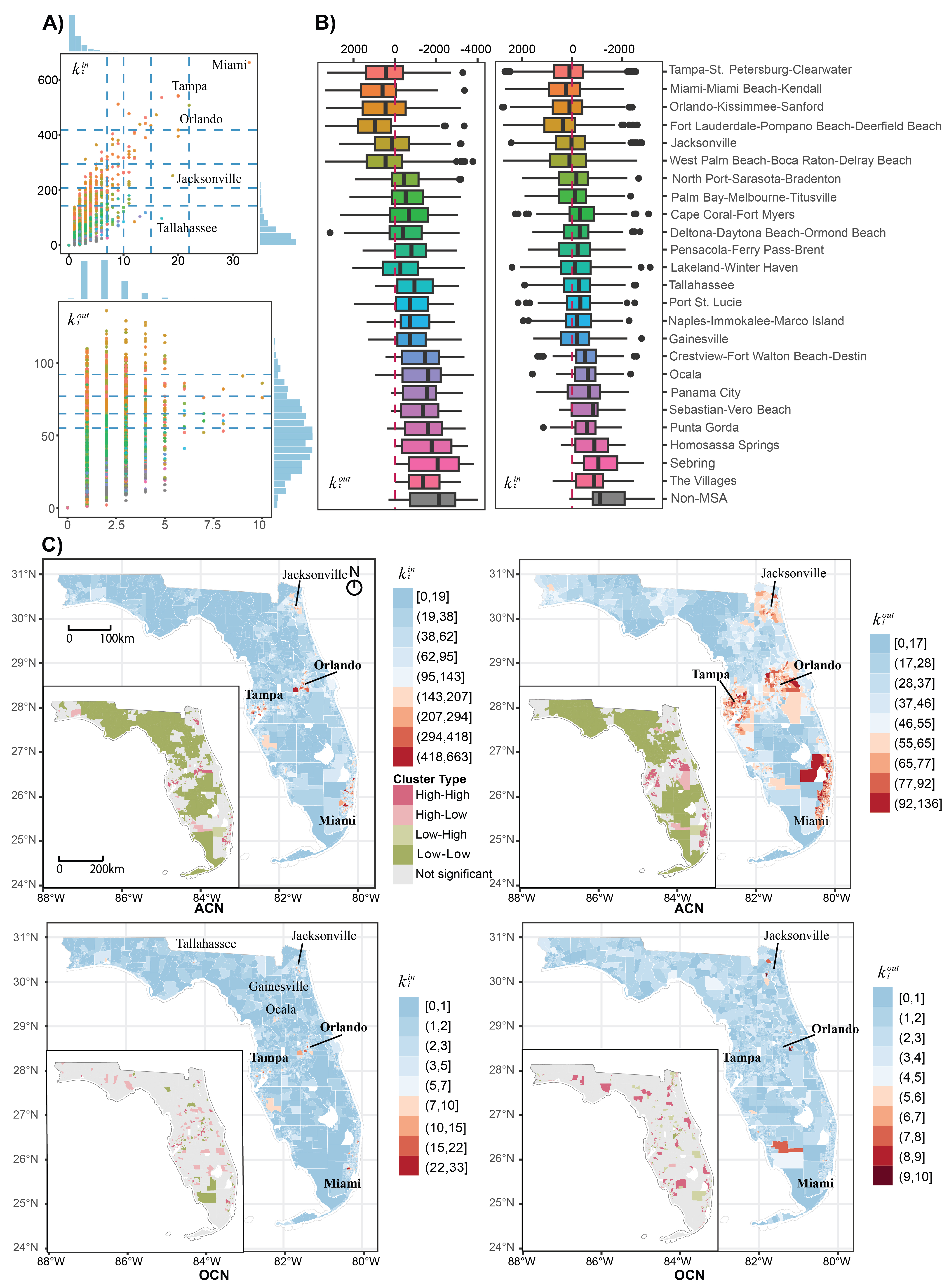
Figure 3: Changes of degree centralities
Citation
Jing, Y., & Hu, Y. (2024). Multiscale Complex Network Analysis of Commuting Efficiency: Urban Connectivity, Hierarchy, and Labor Market. Annals of the American Association of Geographers, 114(8), 1681–1692. https://doi.org/10.1080/24694452.2023.2284296